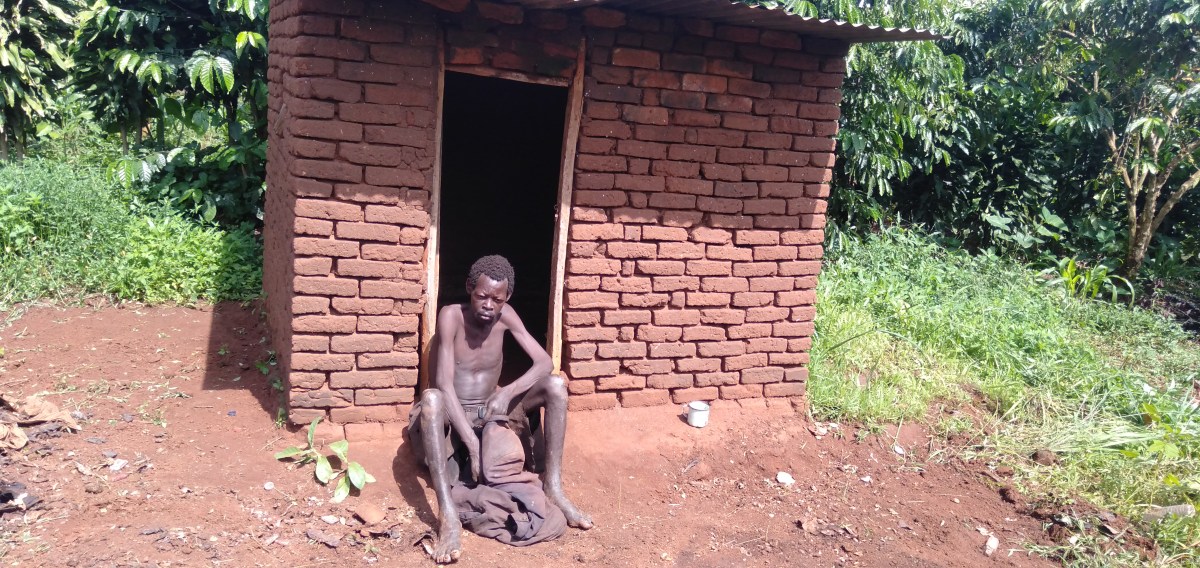
Musa is forty-five. The villagers of Waita, Mayuge Eastern Uganda have derogatorily nicknamed him the ant-hill of jiggers. He is acutely suffering from Tungiasis (jigger disease).

Musa,Tungiasis patient.
Photo|Tom Mwiraria
Jiggers have made colonies in his gaunt frame and crooked his toes, and deformed his legs. The vermin have burrowed into his skin and made a kingdom under his armpits, and established colonies under his toe nails, finger nails, elbows, ankles, knees, lips and eyelids. They crawl up down his sore and back causing a jam as if his back were a super highway of pests. His entire body is a feast of vermin which has left much of his body with festering sores.
Video|Tom Mwiaria
When the Inklusive press a visited Waita village, Musa was rotting away alive in his isolated hut. When cold wind howls at night,it gusts through doorless crumbling baked brick hut and cold bites his frail bones. And when it pours and floods in his tiny isolated hut, Musa wriggles in the mud where he soils himself.

Musa,Tungiasis patient at his isolated hut.
Photo|Tom Mwiraria
Musa drags his heavy sore feet from home to home, village to village, a tiny and dirty begging bow dangling from his left arm, his other holding his falling tatters that hang from his frame; the shreds hardly cover his nudity. A foul stench that emanates from his body announces his arrival to their homes. Before he appears to their doorstep the villagers have long closed their doors tight, and visitors scamper in safety through sugarcane farms ’ Says Wapomba Bakari, a resident of Waita village, Mayuge Sub County in Busoga, Eastern Uganda.
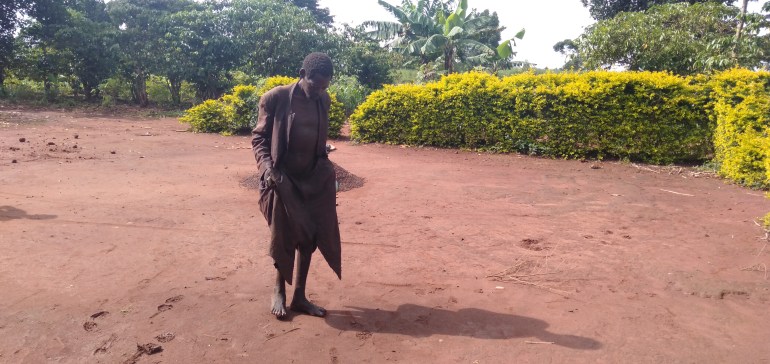
Photo|Tom Mwiraria
Musa was twenty-five when his father died and the family was survived by him and his ailing mother. In a space of one year the hand of death dragged his mother to the grave.Musa is now ‘alone in the world’.
‘He was smart boy, clean, and ambitious determined to shake off the poverty he had inherited from his parents. He earned a living by making bricks. It shocked us when slowly we started seeing him fade away. From that moment Musa isolated himself from peers. A smile wore off his face, and his face ruffled like a paper. Then he lost interest in his brick making occupation and spent bogs of time sleeping.
Musa used to make bricks before he started changing and became sick.Photo|Tom Mwiraria
‘Musa chipped away bit by bit. He must have been depressed by loss of his parents but rumors floated in the four villagers Musa had been bewitched, other talkers say he was bound to inherit jiggers and poverty as it was custom in his lineage’ Bakari relates the journey of a man degraded to the former shadow of himself.

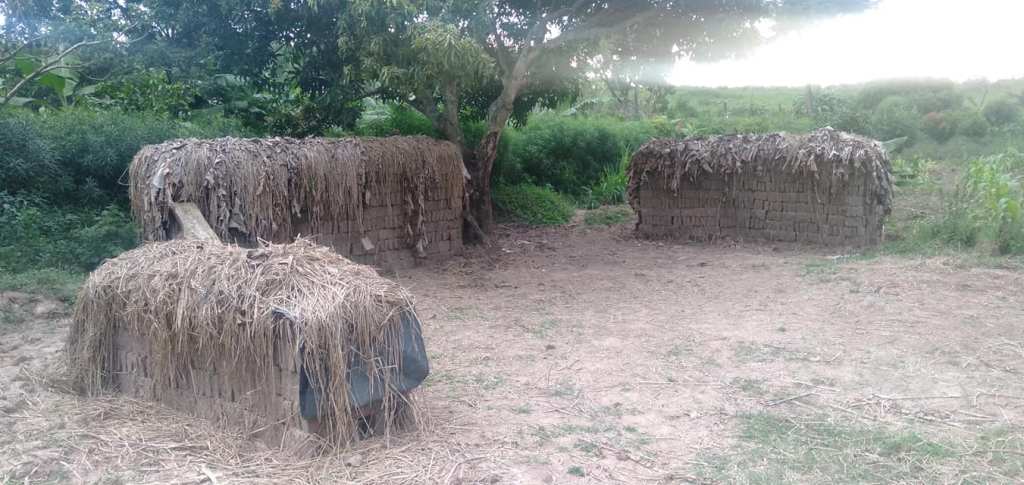
Tungiasis infested home in Waita village,Eastern Uganda.
Photo|Tom Mwiraria
The Inklusive Press saw homes far from help ravaged by jiggers and sorrow.The jigger scourge has swept through Mayuge district and the pests are multiplying geometrically such that in every home there are at least two children who are out of school because of jigger disease. Tungiasis has heavily taken toll on toddlers . In Musa’s homestead there are seven toddlers (nieces and nephews) all affected by jiggers.
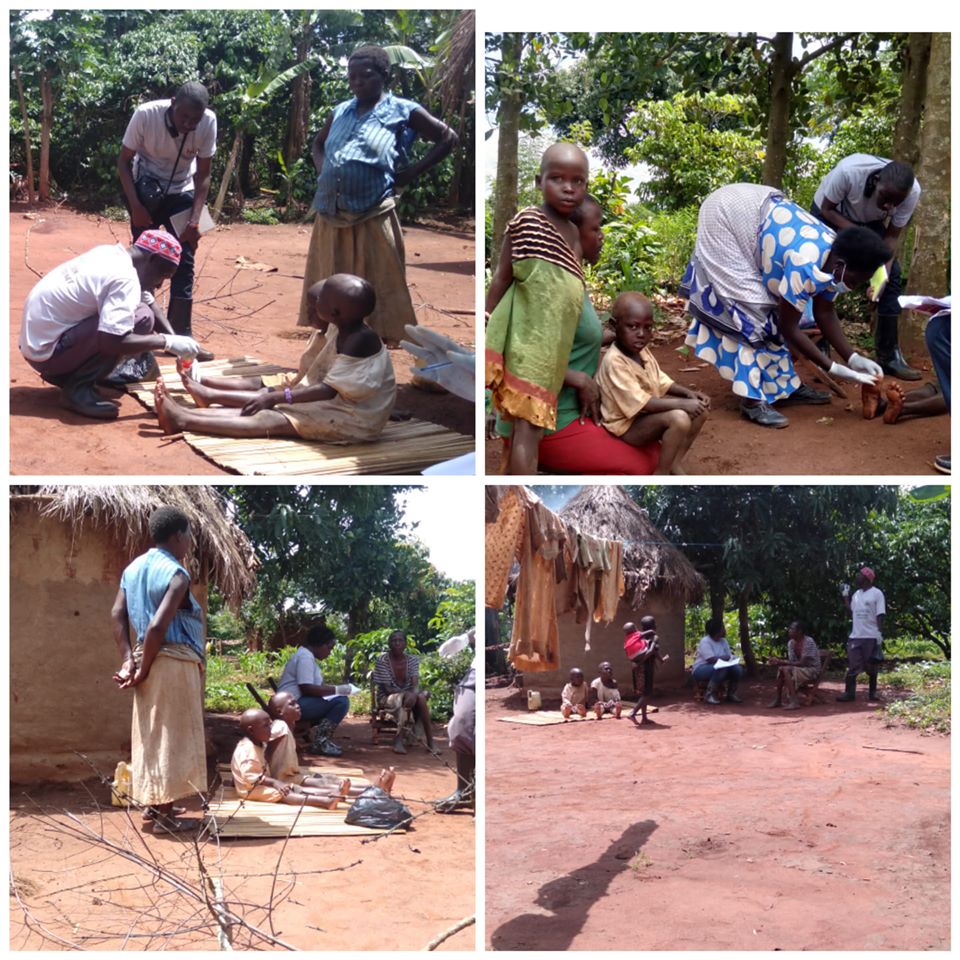
Tungiasis has taken a heavy toll on children in Mayuge District,Uganda.
Photo|Tom Mwiraria
Tungiasis is a neglected parasitic skin disease caused by the permanent penetration blood-feeding sand flea (also called jigger flea) Tunga penetrans ) which burrows into hosts’ skin especially into the toe nails, finger nails,elbows,ankles, knees, buttocks, lips, eyelids. When a pregnant female flea feeds on patient’s blood, it grows fat an and lays egg colonies the shape and size of a pea that can cause pus-filled sores. The flea’s hindquarters remain in contact with the air, providing an avenue for breathing, defecating and expelling eggs’ this is according to a 2011 peer-reviewed article ‘jigger infestation ,’ by Kevin Jawoko on Google Scholar.

Up close with Tunga Penetrans.Source| usf.edu
‘Within 2 weeks of penetration the burrowed flea increases its volume by a factor of 2,000. This is paralleled by intense inflammation of the surrounding tissue”. This is according to European Journal of Clinical Microbiology & Infectious Diseases.

Source:Centers for disease control and prevention (CDC)
Historical reports say that initially, the flea was introduced in Africa in the transatlantic slave trade era. More fleas again arrived to Africa in 1872 with ballast sand carried by a ship that left from Brazil to Angola in 1872.
The earliest reports of Penetrans is from travelers to the Caribbean and South America and Africa ,about native communities that had fled in their homes,and abandoned their villages to seek safety in their numbers at the outskirts of their homes.
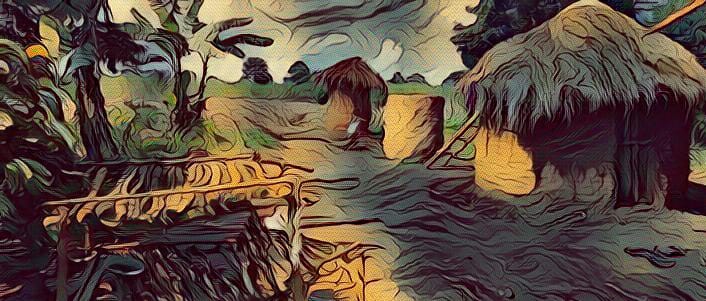
Illustration of an abandoned village|Tom Mwiraria
The jigger epidemic has taken toll on Mayuge district Eastern Uganda and children are the most affected. Most cannot walk to school, others drag their sore feet. A 2014 study entitled ‘Jigger Infestation a Menace to Children’s School Attendance’ published on the Journal of education practice revealed that ‘ jigger parasite is a threat to the children’s education and health. Jigger infestation limits children’s school attendance. Consequently, the children are not likely to cover the content they are supposed to cover by the end of the year. This may translate to poor results and the need by the child to repeat the work the following year. These children may also lag behind their peers in the development of social skills.’

Jigger infestation on feet soles make children unable to walk to school,stigma is rife.Photo|Tom Mwiraria
In Waita village in Mayuge ,Eastern Uganda, there is not a child in every home who is not covered with pustules (swellings) ,ulcers and suppuration (formation of pus) and many children are unable to walk to school.
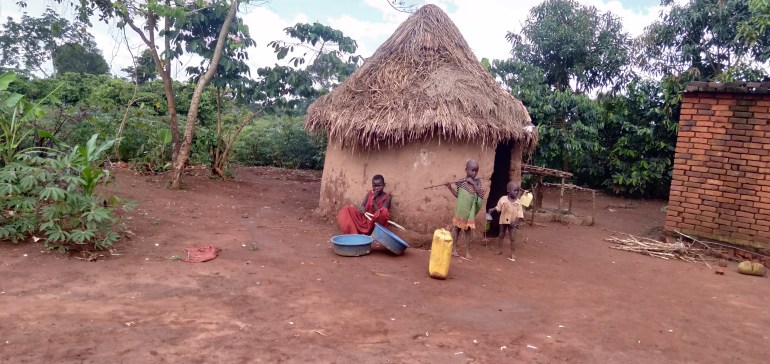
A typical home in Waita village,Mayuge District in Uganda.Photo|Tom Mwiraria
An approximately of 161 primary schools and 50,000 children in Mayuge district are already infested with jiggers.The political leaders in Uganda are silent as the scourge threatens to rob the future of a nascent generation.
Mayuge is situated 120km from Kampala the capital city and 40km from Jinja. Coordinates: 00°27′28″N 33°28′48″E .Mayuge borders Iganga in the north Jinja in the west, Bugiri in the east and Lake Victoria in the south.Mayuge District is one of the Districts with high growth rates, standing at 3.1% above the national average of 3.0% as per census 2014.This are according to Uganda Vision 40 report.
Jigger infestation does not only make going to school, and learning difficult for the children, it also causes psychological trauma and low self-esteem because the severely affected children are derogatorily mocked, isolated and stigmatized.
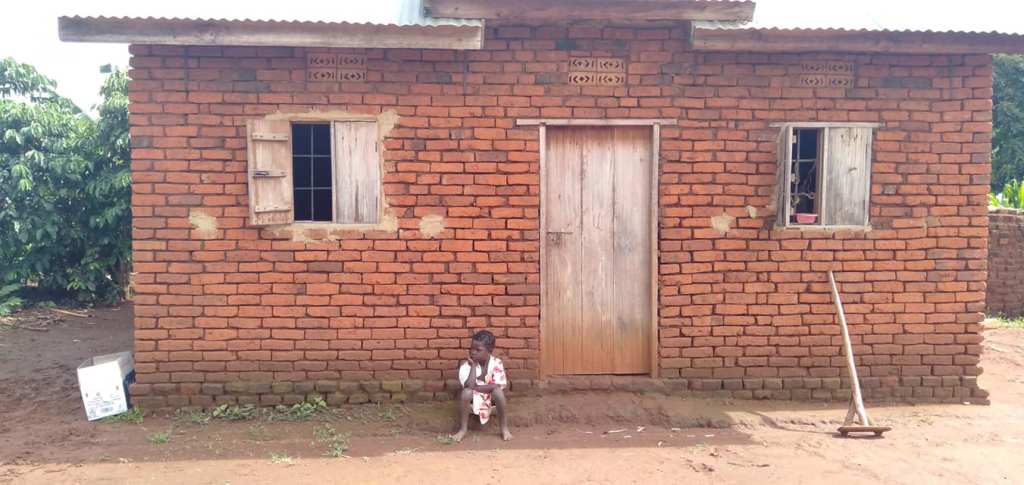
A jigger affected and seemly depressed child seated outside her jigger menaced home in Waita Village,Mayuge,Eastern Uganda,Photo|Tom Mwiraria
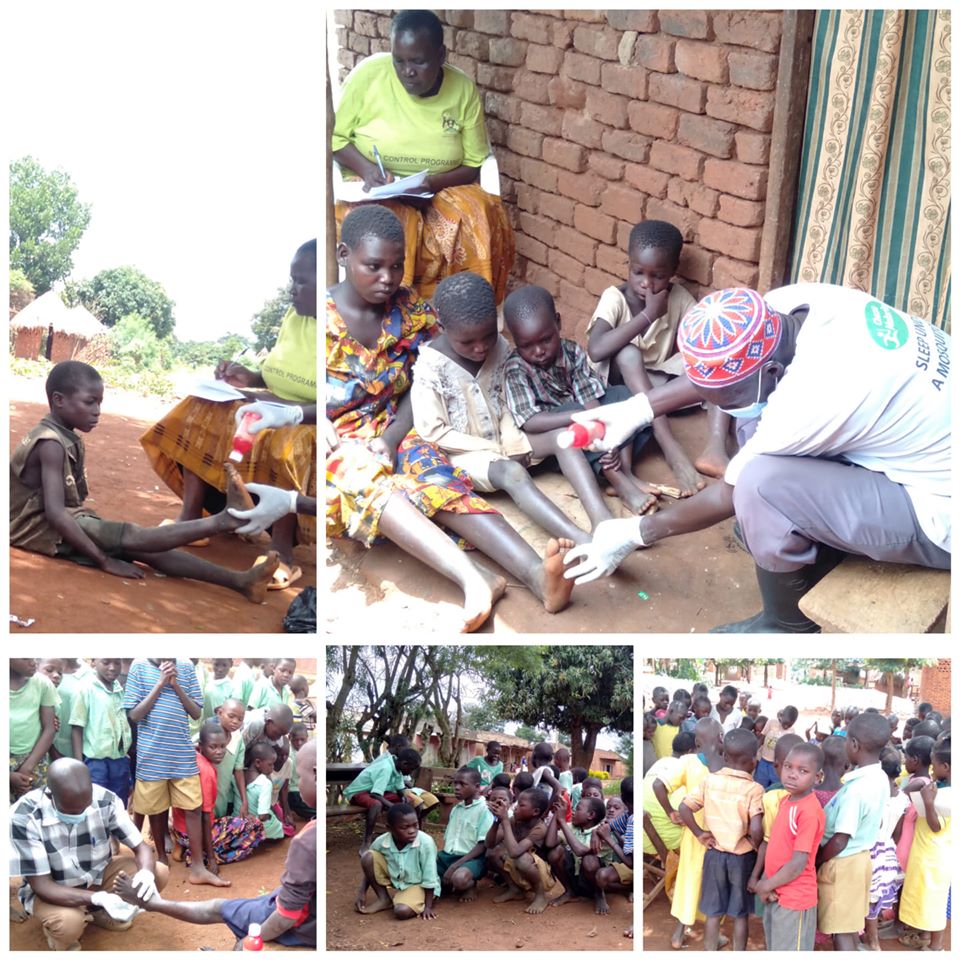
Photo|Tom Mwiraria
Numerous studies have found that severe cases of Tungiasis can lead to fibrosis ulceration, gangrene, loss of toe nails, amputation of fingers and even death, studies show. In non-vaccinated individuals tungiasis may lead to tetanus, this is according to Revista Do Instituto De Medicina Tropical De Sao Paulo-a Journal of the Sao Paulo Institute of Topical Medicine.
As Inklusive Press trailed the epidemic in Waita village , a funeral of a three year old girl had succumbed to Tungiasis and her funeral was being conducted.The Inklusive Press found many children rotting with ulcers from jiggers such that they are unable to walk to school. The disease has caused deformation and loss of toenails, as well as deformation of digits. Reports of Tungiasis elsewhere show that it is a killer disease.In November 2009 ‘The daily Nation’ ,a Kenyan newspaper reported a conspiracy of silence ,following 250 deaths from Tungiasis in the country.

Courtesy|Nation Media Group
The jigger menace seems to recur in Uganda.In 2013 December,the African Report reported a deadly outbreak in the country.The report quoting Kabong district chairperson reads in part,”...more than 8,000 people in my district are infected with jiggers…people will die soon without medical assistance.Some of the infected people cannot even eat using their hands because their fingers are infested with jiggers.”…”Rescue efforts have yet to be organised following the spread of the parasites.”
Uganda Vision 2040, with a theme of sustainable wealth creation to generate prosperity for all, is an ambitious paper tiger.The only community health centre in Waita is ever closed.
Global Pathways to success Uganda, a local initiative led by young change maker -Cynthia Abito used human centered design thinking and found out that Tungiasis is caused by poor hygiene and poverty.
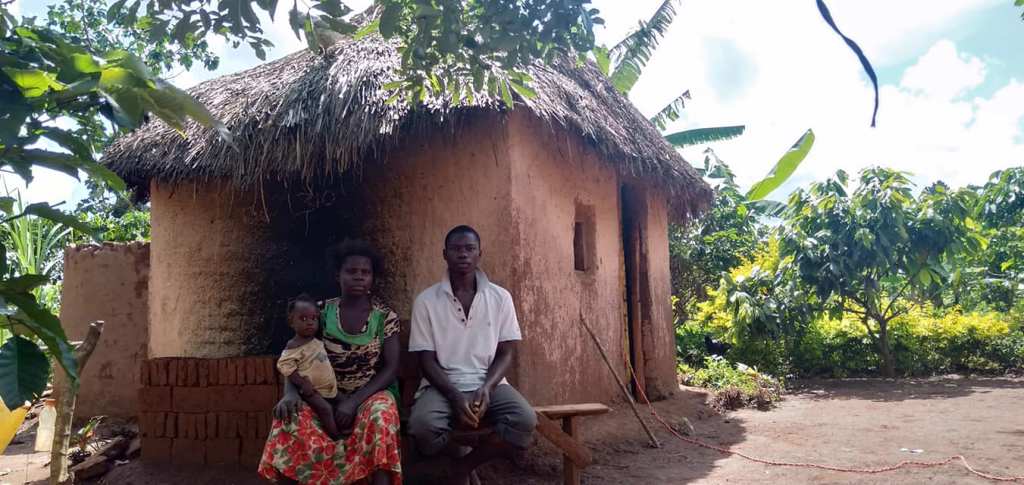
A family of one in Waita village in Mayuge,Uganda.Photo|Tom Mwiaria
Human centred design thinking is a philosophy that empowers an individual or a team or a community to design products,services,systems and experiences that address the core needs of those who experience a problem. What distinguishes human-centered design from other problem solving approaches is its focus on those who experience a problem as core part of the design process, their needs, and whether the solution that has been designed for them is truly meeting their needs effectively or not. The five stages of human centred design is empathise,define,ideate,prototype,and test.

The initiative is also using Positive Youth Development (PYD) approach to promote the physical, mental and spiritual well-being of the most vulnerable women, children and people living with disabilities in Eastern Uganda.
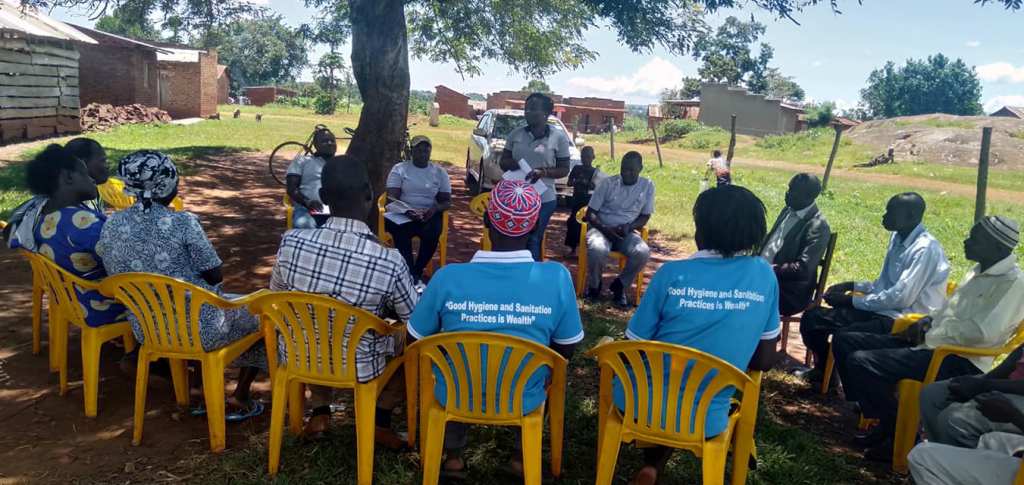
A local initiative-Global Pathways to Success Uganda using human centred design and positive youth development approach to intervene.Photo|Tom Mwiraria
Positive youth development (PYD) is philosophy and approach to working with adolescents and youth that emphasizes building on youths’ strengths and providing supports and opportunities that will help them achieve goals and transition to adulthood in a productive, healthy manner. This is according to U.S. Department of Health & Human Services.
Youth Power learning defines PYD as a learning philosophy and approach that engages youth along with their families, communities and/or governments so that youth are empowered to reach their full potential. PYD approaches build skills, assets and competencies; foster healthy relationships; strengthen the environment; and transform systems.

Source|YouthPower
Global Pathways to Success Uganda (GPSU) ,is using PYD to teach and engage families and the community skills on body hygiene campaign in an intensified fight against jiggers to reduce the health disparities.The initiative is building capacity for personal hygiene by using innovative and affordable means such as kitchen ash for feet washing to prevent jiggers as well as basic jigger treatment skills using hydrogen peroxide.In addition, GPSU is engaging the community in challenging wanting myths and beliefs which associate the pests with a curse and witchcraft.

Tungiasis remains an important public health problem for the very poor, a problem neglected by those who are affected, by the medical profession and by the scientific community. This is according to European Journal TMIH: Tropical Medicine & International Health.
 The Inklusive Press
This is a great story that opens our eyes on the real issues that must be given attention. We are proud of this writing and hope to read more of these stories in Africa so that we can realize our potential through acting in good time.
Fantastic Mwiraria
LikeLiked by 1 person
This is a very revealing story told simply and effectively. It reveals how poverty results to social injustices, stigmas and deflated egos. Researchers, Governments and all good will ambassadors have their job cut out. Well done Mr. Tom.
LikeLiked by 1 person
This is a great story. I like the writing angle the writer has taken to convey his message about Tungiasis.
LikeLiked by 1 person
This artistic writing talent needs to be tapped by a serious international media house urgently & without hesitantation.
LikeLike
Such a reaveling and well narrated story. At least the community received help through this coverage.
LikeLike
Such a reaveling and well narrated story. It’s even more satisfying that the community got help through this coverage.
LikeLike